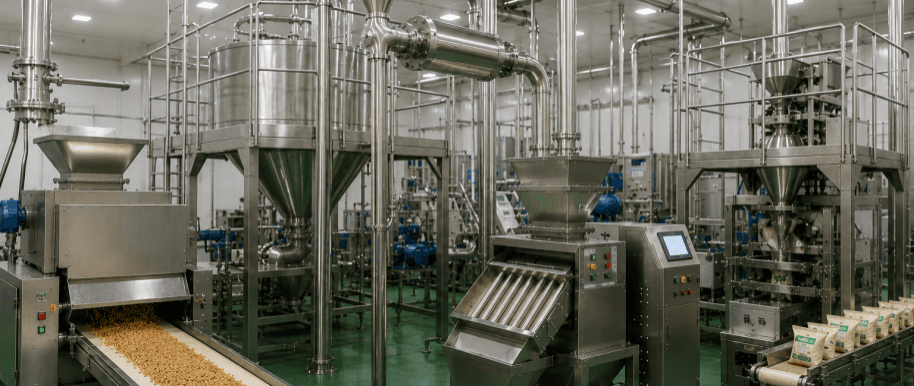
Common Buyer Pain Points
- Fine iron particles, worn metal fragments, nails or wire may enter grain, powder or food material streams.
- Metal contamination creates food safety concerns and can affect product quality.
- Grinding, milling, roasting and pelletizing equipment may be damaged by unexpected ferrous impurities.
- Different food materials require different magnetic contact methods and cleaning structures.
Problems We Solve
Fine metal contamination in food material
Use magnetic rods, grids or drumsFine iron powder and worn metal particles can be captured in hoppers, chutes, pipelines and gravity-flow systems.
Equipment protection before milling or grinding
Install magnets before processing equipmentSuspended magnets, drums and pipeline separators help protect mills, grinders, pellet mills and downstream equipment.
Powder and granular materials have different flow behavior
Match the contact structure to the materialMagnetic bars, grids, drums and pipeline separators should be selected according to particle size, flow rate, moisture and cleaning frequency.
Food-grade requirements need careful handling
Coordinate surface material and cleaning designStainless steel shell options, magnetic strength, housing design and cleaning access should be confirmed according to the production line.
Recommended Equipment
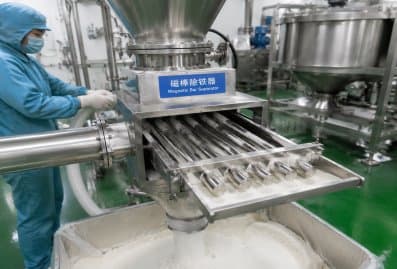
Magnetic Bar / Magnetic Rod
Captures fine ferrous particles in hoppers, drawers, grates and filtration assemblies for powder and granular materials.
Magnetic Grid / Magnetic Grate
Improves contact with gravity-flow materials such as flour, sugar, spices, starch, feed and food additives.
Pipeline Magnetic Separator
Used in enclosed pipeline or gravity-flow systems for powder, granule and food-related material streams.
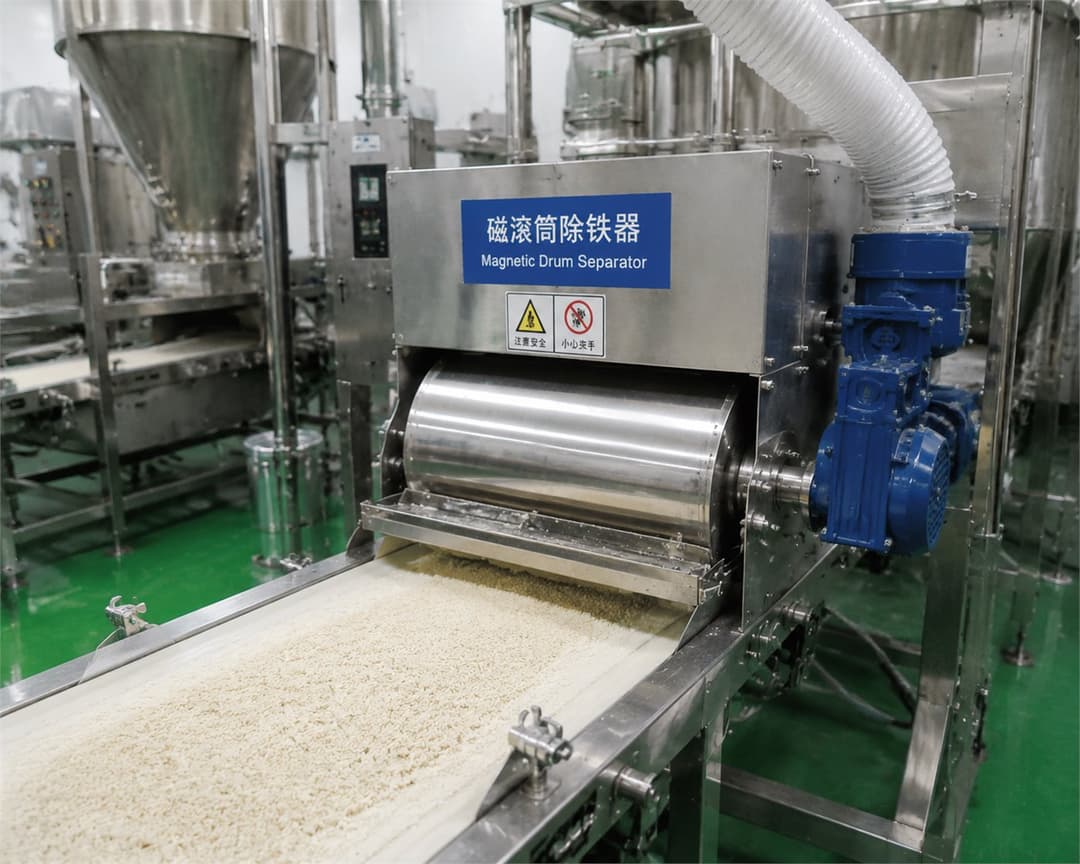
Magnetic Drum
Supports continuous separation for rice, grain, beans, nuts, feed and other flowing bulk food materials.
Application Scenarios
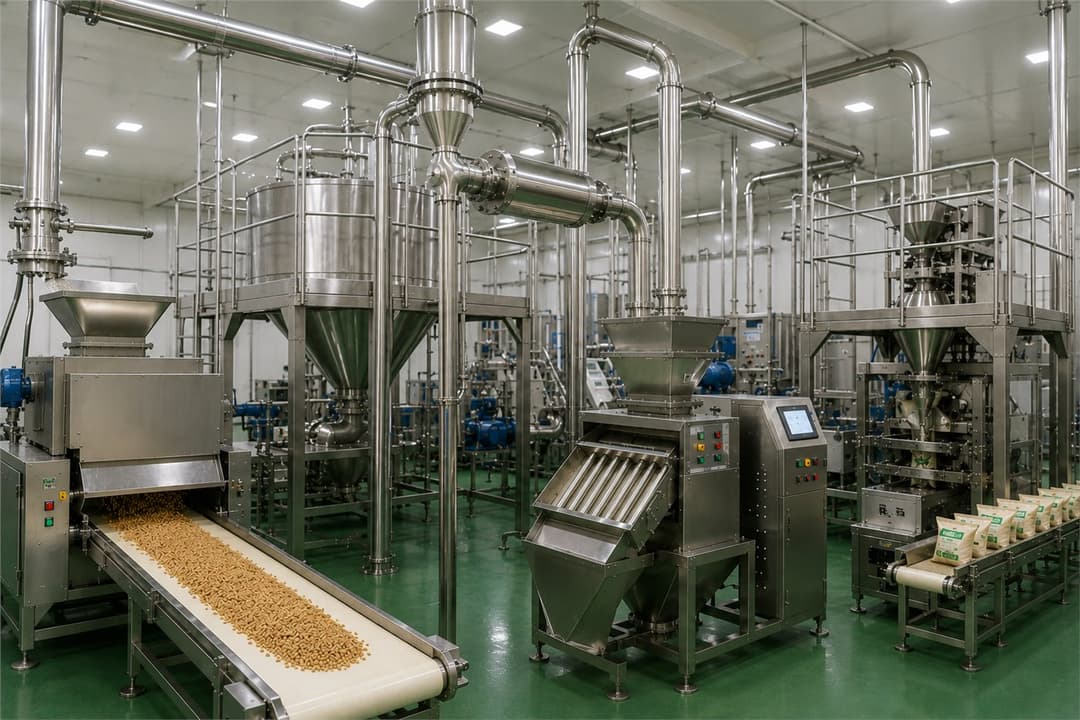
Rice, Wheat and Corn
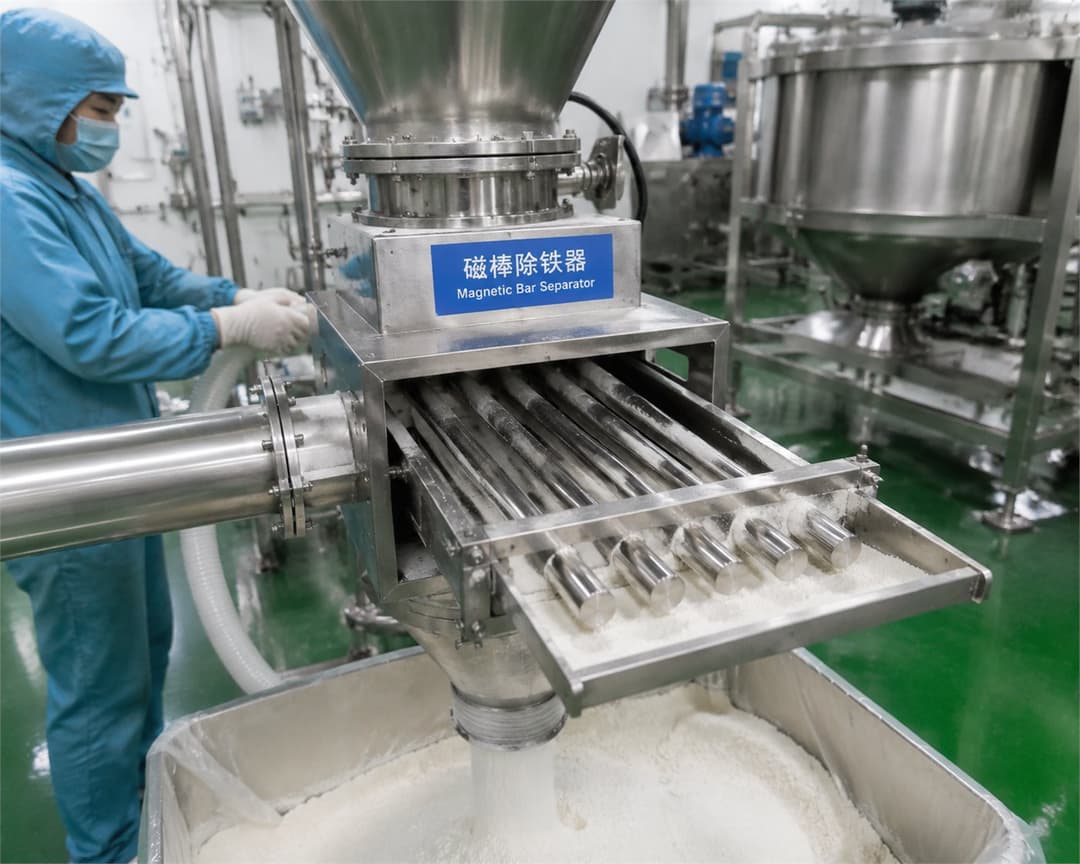
Beans and Nuts
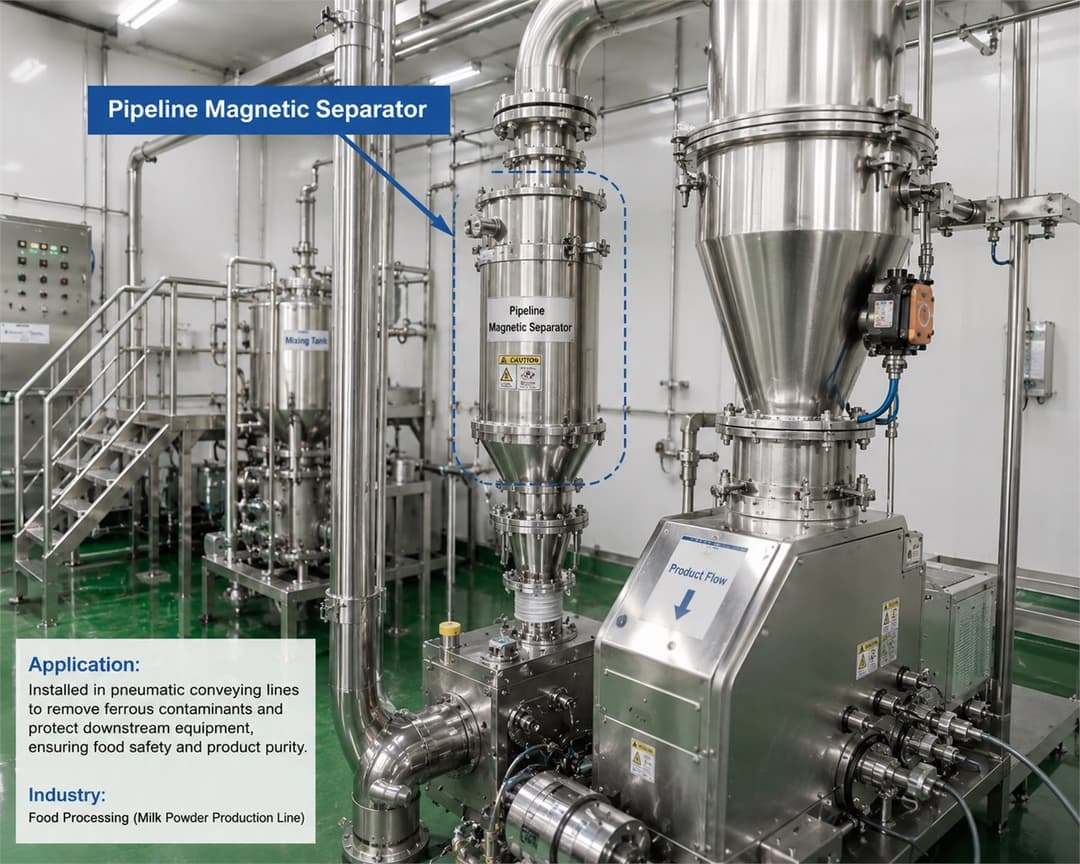
Sugar, Flour and Milk Powder
Coffee Beans and Tea

Spices
Feed
Food Additives and Starch
Food Processing Applications and Recommended Equipment
| Food Type | Recommended Equipment | Application Description |
|---|---|---|
| Rice / Wheat / Corn | Suspended Permanent Magnetic Separator; Self-Cleaning Permanent Magnetic Separator; Magnetic Drum; Pipeline Magnetic Separator | Removes nails, wires, iron chips, and other ferrous impurities from grain and rice processing lines, helping protect rice milling, flour milling, and downstream processing equipment. |
| Beans / Nuts | Suspended Permanent Magnetic Separator; Magnetic Drum; Pipeline Magnetic Separator | Removes ferrous contaminants mixed during transportation and storage, preventing metal contamination and improving food safety. |
| Sugar / Flour / Milk Powder | Magnetic Drum; Magnetic Bar Grate; Pipeline Magnetic Separator | Captures fine iron powder and worn metal particles to improve product purity. |
| Coffee Beans / Tea | Suspended Permanent Magnetic Separator; Magnetic Bar Grate; Pipeline Magnetic Separator | Removes metal impurities, protects roasting and grinding equipment, and helps ensure product safety. |
| Spices, Chili Powder, Pepper Powder | Pipeline Magnetic Separator; Magnetic Bar Grate | Removes ferrous contaminants from powder materials and improves final product quality. |
| Feed | Suspended Permanent Magnetic Separator; Self-Cleaning Permanent Magnetic Separator; Magnetic Drum; Pipeline Magnetic Separator | Protects crushers, grinders, pellet mills, and other feed processing equipment while ensuring safer production. |
| Food Additives / Starch | Pipeline Magnetic Separator; Magnetic Bar Grate | Removes fine ferrous impurities and helps meet food-grade processing requirements. |
Recommended Product Types
FAQ
Which magnetic equipment is suitable for food and grain processing?
For powders and granules, magnetic bars, grids and pipeline separators are commonly considered. For continuous bulk flow, magnetic drums or suspended magnets may be suitable. Final selection depends on material, particle size, flow rate and cleaning method.
What information should I provide before quotation?
Please share material type, conveyor belt width, belt speed, material layer height, installation height, iron contamination level, target capacity and site photos if available. These details help us recommend a practical separator type instead of guessing from a catalog.